

NYK Test Aims to Tame 'Methane Slip'

NYK has conducted its first onboard measurement in a demonstration test of a methane oxidation catalyst system for marine engines fueled by liquefied natural gas (LNG).This demonstration test is being carried out in collaboration with Mitsubishi Heavy Industries Marine Machinery & Equipment Co., Ltd. (MHI-MME), Mitsubishi Shipbuilding Co., Ltd. (MHIMSB), and DAIHATSU INFINEARTH MFG.CO.,LTD. (IE).The catalyst system has been installed on the LNG bunkering vessel KEYS Azalea, which supplies LNG fuel to LNG-fueled ships. The vessel is owned by KEYS Bunkering West Japan Co., Ltd.
MHI-MME, Mitsubishi Shipbuilding Obtain AiP for Methane Oxidation Catalyst System Design

Mitsubishi Heavy Industries Marine Machinery & Equipment Co., Ltd. (MHI-MME) and Mitsubishi Shipbuilding Co., Ltd., both part of the Mitsubishi Heavy Industries (MHI) Group, have obtained Approval in Principle (AiP) from Nippon Kaiji Kyokai (ClassNK) for the basic design of a methane oxidation catalyst system for marine LNG-fueled engines, jointly developed with Daihatsu Infinearth Mfg. Co., Ltd. A presentation ceremony was held today at Sea Japan 2026, an international maritime exhibition being held at Tokyo Big Sight in Koto-ku…
DNV Paper Finds That Existing LNG Infrastructure Can Ease Transition to Low‑GHG Methane

Demand for low greenhouse gas (GHG) methane is expected to grow in the coming decades as the expanding LNG‑capable fleet faces increasingly stringent emissions requirements. But its long-term viability as marine fuel depends on regulatory clarity, closing the supply gap, and securing volumes against competing demand.With around 800 LNG‑capable vessels currently in operation, 600 more on order, existing bunkering infrastructure, decades of operational experience, and well-established international safety standards, the fleet is already technically mature.
Japan’s Methane Slip Project Achieves 98% Reduction in LNG Vessel Trials
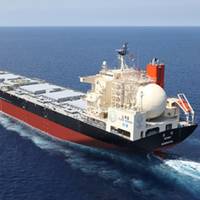
Mitsui O.S.K. Lines (MOL), Kanadevia Corporation, and Yanmar Power Solutions have achieved a 98% methane slip reduction rate in onboard trials of LNG-fueled vessels, exceeding their initial target of 70%.The trials are part of the Green Innovation Fund Project ‘Development of Next-Generation Vessels’ led by Japan’s New Energy and Industrial Technology Development Organization (NEDO).The project, which runs from fiscal 2021 through 2026, aims to combine methane oxidation catalysts…
The Importance of Methane Number for Marine Engines

The current standards for LNG for marine use (ISO 23306:2020) don’t define limits for Methane Number even though it is an important fuel characteristic that can vary with fuel source and the addition of bioLNG into fuel blends.Power generation organization CIMAC’s Working Group 17 says Methane Number is like the Octane Number of gasoline in that it is a measure of the fuel’s resistance to auto-ignition or engine knock.In diesel engine combustion, gaseous fuel in the cylinder is put under high temperature and pressure as the flame front advances.
WinGD Joins Methane Abatement Initiative for LNG-Fueled Ships
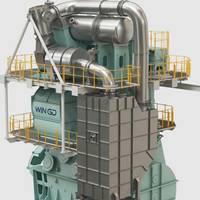
Engine developer WinGD has joined the Methane Abatement in Maritime Innovation Initiative (MAMII), becoming the first engine developer to become a partner in the growing cross-sector push to better understand and address methane from LNG-fueled ships.LNG, primarily methane, can play a role in reducing shipping emissions. But its climate benefits depend on methane being effectively managed. Proven technologies for onboard methane abatement are emerging, and organizations like WinGD…
Study: Ships Trigger Ocean Methane Emissions
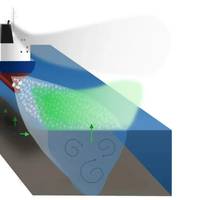
Ship traffic in shallow areas, such as ports, can trigger large methane emissions by just moving through the water. The researchers in a study, led by Chalmers University of Technology in Sweden, observed 20 times higher methane emissions in the shipping lane compared to nearby undisturbed areas."Our measurements show that ship passages trigger clear pulses of high methane fluxes from the water to the atmosphere. This is caused by pressure changes and mixing of the water mass.
CIMAC Releases FAQs For Methanol as Marine Fuel
CIMAC WG 7 Fuels has released a new guideline titled “Frequently Asked Questions (FAQ) - ISO 6583:2024: Methanol as a Fuel for Marine Applications – General Requirements and Specifications.”With the publication of ISO 6583:2024 in November 2024, the first standard for methanol as a marine fuel, numerous questions were expected to arise. Consequently, ISO/TC 28/SC4/WG18 requested CIMAC WG 7 Fuels to support the standard and the marine industry by creating a FAQ document. CIMAC WG 7 Fuels formed a sub-group…
MOL Becomes Member of International e-Methane Coalition

Mitsui O.S.K. Lines (MOL) has joined the e-NG Coalition, an international alliance that aims to accelerate the development and use of e-methane to accelerate the decarbonization of shipping industry.With the addition of MOL, the total number of participating companies of the e-NG alliance has increased to 20.Through its participation in the alliance, MOL will establish an international supply chain for next-generation fuels and accelerate its initiatives to reduce the environmental…
Port of Tallinn Inks Deal to Build New Liquefied Methane Terminal
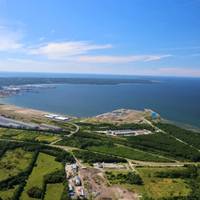
Tallinna Sadam and JetGas OÜ have signed an agreement for establishment of a liquefied methane terminal in Muuga Harbour, located on the southern coast of the Gulf of Finland.According to the agreement, JetGas will build a liquified methane terminal with up to five storage tanks in stages, with a connecting pipeline to the quayline, by 2030 at the latest.The launch of the first stage of the terminal with the construction of one tank is planned for the end of 2027.Tallinna Sadam…
Wärtsilä to Convert Engines on Chevron’s LNG Carriers to Cut Methane Emissions
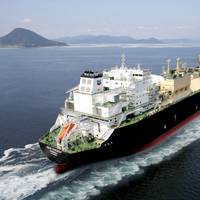
Technology group Wärtsilä, in partnership with Chevron Shipping Company, plans to convert one engine on six of Chevron Transport Corporation LNG Carriers from dual-fuel (DF) to spark gas (SG) operation to reduce methane emissions.The conversions are intended to reduce greenhouse gas emissions by lowering methane slip in support of Chevron Shipping’s broader efforts to reduce the carbon intensity of its operations.The ‘marine industry first’ was made possible after two years of…
Operational Study: Methane Slip Varies with Engine Load
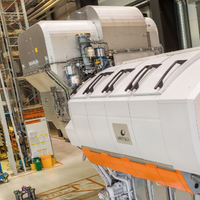
The Transport Emission Control Team at VTT Technical Research Centre of Finland has released a study of methane slip and other emissions from an LNG-powered marine engine operating under real-life conditions.The now published study ‘Methane slip and other emissions from newbuild LNG engine under real-world operation of a state-of-the art cruise ship' details the results of a study conducted on the newbuild cruise ship MSC World Europa. One of its five engines, a Wartsila 46DF…
MMMCZCS Calls for Early Regulation of Methane Slip
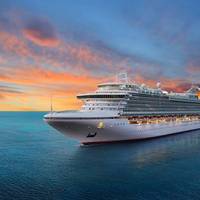
The Maersk Mc-Kinney Møller Center for Zero Carbon Shipping (MMMCZCS) has released a new report: Tackling methane slip in shipping.Past research at the MMMCZCS has demonstrated that current regulations that include methane, such as CO2-equivalent fuel standards (e.g., FuelEU Maritime), will have a limited effect on reducing onboard methane emissions in the short- to mid-term. Furthermore, the default methane slip value concept does not provide a direct incentive to engine makers…
World's Largest Cruise Ship Sets Sail, Bringing Concerns About Methane Emissions
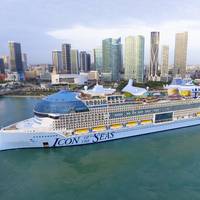
The world's largest cruise ship is set for its maiden voyage on Saturday, but environmental groups are concerned that the liquefied natural gas-powered vessel - and other giant cruise liners to follow - will leak harmful methane into the atmosphere.Royal Caribbean International's Icon of the Seas sets sail from Miami with capacity for 8,000 passengers across 20 decks, taking advantage of the surging popularity of cruises.The ship is built to run on liquefied natural gas (LNG), which burns more cleanly than traditional marine fuel but poses greater risks for methane emissions.
COP28: US Cracking Down on Methane from Oil and Gas

The Biden administration on Saturday unveiled final rules aimed at cracking down on US oil and gas industry releases of methane, part of a global plan to rein in emissions that contribute to climate change.The rules, two years in the making, were announced by US officials at the United Nations COP28 climate change conference in Dubai. The US and other nations attending the summit are expected to detail how they will achieve a 150-country pledge made two years ago to slash methane emissions by 30% from 2020 levels by 2030.Methane tends to leak into the atmosphere undetected from drill sites…
COP28 Puts Spotlight on Methane Pledges
Delegates at this year's U.N. COP28 climate summit are anxious to boost the world's climate change agenda with concrete plans for clamping down on the second-most prominent greenhouse gas – methane.While more than 150 countries have promised since 2021 to slash their methane emissions 30% from 2020 levels by 2030 under the U.S.- and EU-led Global Methane Pledge, few have detailed how they will achieve this.What is needed now is to turn those pledges into urgent action – with financial…
Oxidation Catalyst Project Aims for 70% Methane Slip Reduction
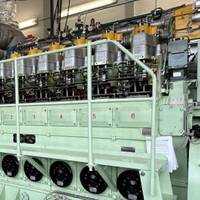
MAN Energy Solutions has announced that it is developing an oxidation catalyst for four-stroke engines that will significantly reduce methane slip. Called ‘IMOKAT II’ and developed at MAN Energy Solutions’ headquarters in Augsburg, Germany, the research project is currently undergoing testing at the company’s Frederikshavn, Denmark facility.Funded by the German Federal Ministry for Economics and Climate Action, the new project will investigate the operational experience of a pre-turbo methane-oxidation catalyst…
EU Targets Upstream Methane Emissions from Imports

The European Council and Parliament have reached a provisional political agreement on a regulation for tracking and reducing methane emissions in the energy sector.The regulation introduces new requirements for the oil, gas and coal sectors to measure, report and verify methane emissions, as well as put in place mitigation measures to avoid such emissions, including detecting and repairing methane leaks and limiting venting and flaring. It also puts forward global monitoring tools to ensure transparency on methane emissions from imports of oil…
Japanese Group Sees Carbon Recycled Methane as Zero-emission Ship Fuel
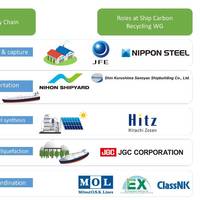
Ship Carbon Recycling Working Group of Japan's Carbon Capture & Reuse Study Group has said that carbon recycled methane produced by methanation technology can be recognized as zero-emission ship fuel.Methanation has been described as a technology for synthesizing methane, the main component in natural gas, by causing a chemical reaction between hydrogen and CO2 in a reactor vessel filled with a catalyst.It uses emitted CO2 separated and captured from industrial facilities. As the CO2 generated when combusting synthesized methane is considered to be offset by the separated and captured CO2…
Future Fuels: 275 Altenative Fuel Ships Ordered in 2022
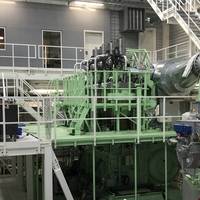
The total number of ships with alternative fuels ordered in 2022 was 275 (excluding battery operated vessels), according to numbers released today from DNV viat its Alternative Fuels Insight report.In addition, more than 50 LPG carriers have been ordered with LPG dual fuel systems. Predictably, LNG led the way with 222 ships or 81 % of total orders. Seventy-four percent of these orders were for container vessels and Pure Car and Truck Carriers (PCTCs), while product tankers came in third representing 9 % of orders.
MOL's Second LNG-Fueled Ferry Enters Service
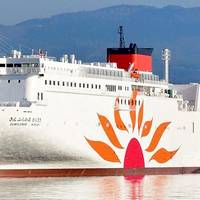
Mitsui O.S.K. Lines (MOL) has announced that the second of Japan's first two LNG-fueled ferries, the Sunflower Murasaki, has entered service.The vessel is owned by MOL and operated by its group company Ferry Sunflower. The vessel is a sister ship to the Sunflower Kurenai, which began operation in January, and will sail the Osaka-Beppu route between Sunflower Ferry Terminal (Osaka) and Beppu International Tourist Port (Oita) as a replacement for the existing vessel Sunflower Cobalt.The 17…
Furetank and Wärtsilä Advance Engine Technology to Reduce Methane Slip
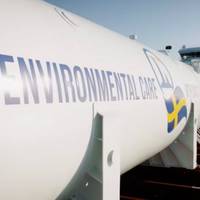
Wärtsilä and Swedish shipping company Furetank are co-developing and testing two technologies showing the potential to halve the methane slip.Running vessels on LNG or bio-LNG reduces emissions of CO2, NOx, SOx and harmful particles, but the downside is methane slip: the release of unburned gas fuel, not fully combusted in the engines.Although the fraction released is small, methane is a more potent greenhouse gas than CO2.Two technical solutions have been tested in Furetank’s Vinga series tankers.



