

Gearing up for MEPC 84

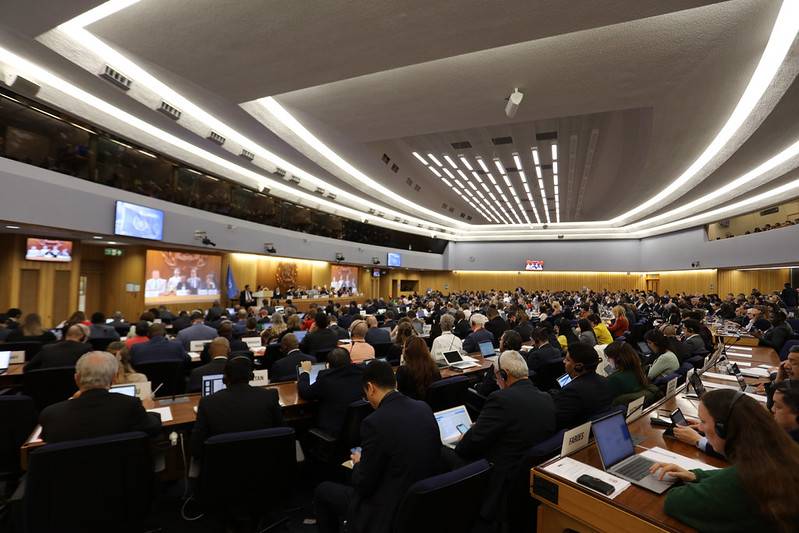
The shipping industry is getting ahead of discussions at MEPC 84 next week by reaffirming their commitment to the IMO.
BIMCO, CLIA, ICS, INTERCARGO, INTERFERRY, INTERTANKO and WSC, representing the global commercial shipping fleet, issued a statement saying they remain committed to pursuing the ambition established within the 2023 IMO Strategy on Reduction of GHG Emissions from Ships, having invested and committed billions of dollars to trial and implement the use of alternative fuels and innovative technology.
That investment is in doubt after the postponement in October 2025 of the adoption of new IMO GHG regulations. A number of countries changed their positions after threats from the United States, including tariffs and reprisals for any country that supported the framework.
However, the postponement has not entirely dampened ambition, and shipowners, OEMs and ports continue to push forward with technology developments needed for alternative fuels and technologies.
That includes this week’s announcement by Everllence of the successful factory acceptance test of its first ammonia-burning engine built by licensee Engine & Machinery of Hyundai Heavy Industries in South Korea.
Everllence has expressed concern over the current viability of the IMO’s 2023 GHG Strategy that aims for net‑zero emissions from international shipping by or around 2050. The company has stated that this will only be achievable by combining alternative fuel newbuilds with large‑scale engine conversions.
Klaus Rasmussen – Project Sales Director, PrimeServ Denmark – Everllence, said: “The retrofit market is currently in the doldrums with shipowners backing off investment until clarity arrives regarding IMO rules. This leaves a huge gap in the attainability of the Framework. Without these retrofits, it will be close to impossible to meet GHG targets in time. Action is critical. We have to scale the conversion pathway and unlock the vessel volume required to meet the IMO’s strategy.”
Meanwhile, Ralph Regenvanu, Vanuatu's Minister for Climate Change Adaptation, said: “Powerful states are trying to sabotage decarbonization of shipping. Pacific Island states cannot and will not allow key climate shipping agreement to be watered down.”
He argues: “The global fallout of the closure of the Strait of Hormuz may create the impression that the world cannot function without fossil fuels. Nothing could be further from the truth. Every single industry can and must decarbonize. For global shipping, this process would be relatively easy because technological solutions exist and a single United Nations agency can set legally binding rules for all ships. The first steps have already been made.”
What will happen next week?
As UCL pointed out after the October 2025 meeting: “The decision on the IMO’s Net Zero Framework does not override or change the foundation of the GHG Reduction Strategy that was adopted at MEPC 80 in 2023. This unanimously adopted strategy commits the organization to absolute GHG emission reductions of 20-30% in 2030 and 70-80% in 2040, on a pathway to reaching net-zero emissions by/around 2050. As long as that is the stated strategy, the IMO should in theory make progress toward adopting regulations in line with it.”


