Port Authority
A port authority operates ports and other transportation infrastructure for a special-purpose district. Whether operated directly by the government or in cooperation with government agencies, North American port authorities are public entities and are governed by a board or commission. Most port authorities are financially autonomous. Port districts may also operate shipping terminals, airports, railroads, and irrigation facilities. The port authority often owns land, dictates fees, and collects taxes.

Saronic Selects Port of Gulfport for Marauder On-Water Testing
Saronic has expanded its operations to Gulfport, Mississippi, establishing an initial…

Nick Primrose Joins Jones Walker as Special Counsel
Jones Walker LLP welcomed Nick Primrose as special counsel in the Government Relations…

Hybrid Mobile Harbor Crane Commissioned for Port of Gulfport
SSA Marine and the Mississippi State Port Authority at Gulfport (Port of Gulfport)…

Singapore Issues Eight New LNG Bunkering Licenses
Singapore has issued eight new licenses to supply liquefied natural gas as a marine fuel in Singapor

Port of Bilbao Sees Largest YoY Growth Since 2004
In the first half of the year, the Port of Bilbao handled 17,317,427 tons of cargo…

Boluda Corporación Marítima Inaugurates Rotterdam Headquarters
Boluda Corporación Marítima has officially inaugurated its Netherlands headquarters in Rotterdam…

MPA, World Maritime University to Continue Strengthening Maritime Education, Leaders
The Maritime and Port Authority of Singapore (MPA) and World Maritime University…

Echandia to Provide Battery Systems for Two Electric Tugs
Knowledge Marine & Engineering Works has selected Echandia to supply battery systems…

Valenciaport Hackathon Highlights Growing Role of Live Port Innovation
The Port of Valencia is strengthening its position as a proving ground for maritime…

Traffic through Strait of Hormuz Slows After Vessel Attack
Fewer vessels transited the Strait of Hormuz on Friday than earlier this week, hours…

Three Dead After Supply Boat Sinks in Singapore
A supply boat sunk off Pasir Panjang Terminal on June 12 at about 9.30am after colliding…

Three Dead as Supply Boat Sinks Off Singapore Terminal
A supply boat sunk off Pasir Panjang Terminal on June 12, 2026 at about 9.30 AM after…
3D printing, also known as additive manufacturing, is rapidly gaining traction in the shipbuilding industry. This innovative technology allows for the creation of complex components and structures by adding material layer by layer, rather than subtracting it from a larger block. As the maritime sector seeks to enhance efficiency, reduce costs, and improve sustainability, 3D printing is emerging as a powerful tool that has the potential to revolutionize shipbuilding and repair processes.
The maritime industry is undergoing a significant transformation as it seeks to reduce its environmental impact and comply with increasingly stringent regulations on emissions. One of the most promising avenues for achieving these goals is the adoption of alternative fuels in marine propulsion systems. These fuels, including liquefied natural gas (LNG), biofuels, hydrogen, and ammonia, offer various benefits and challenges that are reshaping the future of marine propulsion. This article provides a technical overview of the key alternative fuels currently being explored and their implications for the maritime industry.
Maritime piracy in Southeast Asia has been a persistent and complex issue with deep historical roots and contemporary relevance. This region, characterized by its extensive coastal areas, strategic maritime routes, and bustling trade activities, has frequently been targeted by pirates. The issue of piracy in Southeast Asia presents economic, security, and governance challenges that require regional cooperation and coordinated efforts.
A winch is a mechanism used to reel in, to let out, or otherwise adjust the tension of a rope, wire, or cable. Boats and ships make use of multiple winches to handle halyards, sheets, as well as anchor or mooring lines. The basic mechanism consists…
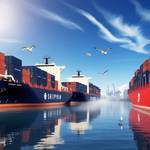
Container ships are vessels designed specifically to transport standardized containers. Container ships have revolutionized shipping, making it more cost-effective and efficient to transport goods across oceans.