Port Authority
A port authority operates ports and other transportation infrastructure for a special-purpose district. Whether operated directly by the government or in cooperation with government agencies, North American port authorities are public entities and are governed by a board or commission. Most port authorities are financially autonomous. Port districts may also operate shipping terminals, airports, railroads, and irrigation facilities. The port authority often owns land, dictates fees, and collects taxes.

Contecon Manzanillo Ready for Ultra Large Container Ships
Contecon Manzanillo S.A. de C.V. (CMSA), International Container Terminal Services…

Bryan Jones Named HDR Marine Terminals Leader
Ports engineer Bryan Jones has been named HDR’s marine terminals leader.Based in Savannah…

Saronic Selects Port of Gulfport for Marauder On-Water Testing
Saronic has expanded its operations to Gulfport, Mississippi, establishing an initial…

Nick Primrose Joins Jones Walker as Special Counsel
Jones Walker LLP welcomed Nick Primrose as special counsel in the Government Relations…

Hybrid Mobile Harbor Crane Commissioned for Port of Gulfport
SSA Marine and the Mississippi State Port Authority at Gulfport (Port of Gulfport)…

Singapore Issues Eight New LNG Bunkering Licenses
Singapore has issued eight new licenses to supply liquefied natural gas as a marine fuel in Singapor

Port of Bilbao Sees Largest YoY Growth Since 2004
In the first half of the year, the Port of Bilbao handled 17,317,427 tons of cargo…

Boluda Corporación Marítima Inaugurates Rotterdam Headquarters
Boluda Corporación Marítima has officially inaugurated its Netherlands headquarters in Rotterdam…

MPA, World Maritime University to Continue Strengthening Maritime Education, Leaders
The Maritime and Port Authority of Singapore (MPA) and World Maritime University…

Echandia to Provide Battery Systems for Two Electric Tugs
Knowledge Marine & Engineering Works has selected Echandia to supply battery systems…

Valenciaport Hackathon Highlights Growing Role of Live Port Innovation
The Port of Valencia is strengthening its position as a proving ground for maritime…

Traffic through Strait of Hormuz Slows After Vessel Attack
Fewer vessels transited the Strait of Hormuz on Friday than earlier this week, hours…
Naval architecture is the field of engineering which deals with the design, construction and repair of ships, boats, and other marine vehicles. Ship and vessel design relies on many of the same technologies and engineering expertise found on shore…
Drug smuggling has long been a lucrative enterprise for criminal organizations worldwide. With the increasing sophistication of law enforcement agencies and border controls, smugglers are continuously adapting their methods. One of the most challenging trends to combat is the use of ships and submarines to transport illicit drugs across international waters. This article explores the methods, routes, and challenges associated with maritime drug smuggling.
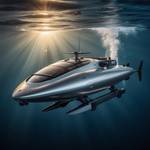
The maritime industry is on the brink of a revolution, with autonomous and unmanned marine vehicles poised to redefine the future of shipping. These innovative vessels, powered by advanced technologies and cutting-edge propulsion systems, offer numerous advantages, including increased efficiency, reduced operational costs, and enhanced safety. In this article, we'll explore the current state of autonomous marine vehicles, their propulsion systems, and the potential impact they may have on the global shipping industry.
Marine salvage is the process of rescuing a ship, its cargo, or other property from peril. Salvage encompasses rescue towing, putting out fires, patching or repairing a ship, refloating a sunken or grounded vessel, moving a disabled vessel in order to clear navigation channels…
U.S. Rebuilding Shipbuilding Industry with Policy and InvestmentThe U.S. government is launching a new era for shipbuilding, with a focus on industrial base renewal, national security, and economic growth. Key developments include:The establishment…